Browse our …
You've viewed …
You haven't yet viewed any products on our store. If you've been here before, you may need to sign in.
On Twitter …
News -
The New Hector Ship at Pictou: A new Voyage of Heritage to remember 1773 – Scotland and Canada 12 July 2025 launch
The New Hector Ship at Pictou: A new Voyage of Heritage to remember 1773 – Scotland and Canada 12 July 2025 launch
Celebrating the Launch of a Maritime Icon in Nova Scotia
Introduction
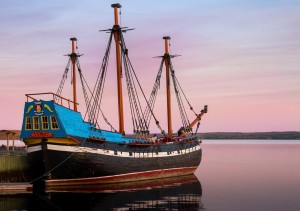
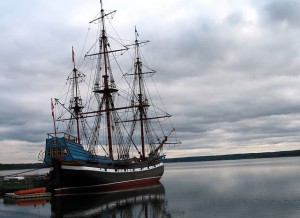
In the heart of Nova Scotia, at Pictou Harbour, a new boat has been built to add to the story of Canadian maritime history. The arrival of the new replica Hector ship stands not merely as an event, but as a reminder of our heritage, human help and resilience, and the strong ties between Scotland and Canada. This newsletter looks at the story of the new replica Hector, exploring its significance, the community spirit that brought it to life, and the promise it holds for the future.
The Story of the Original Hector
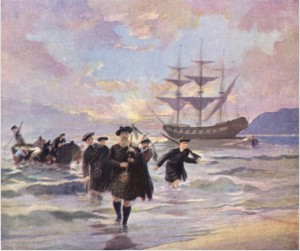
To truly appreciate the feelings surrounding the new replica Hector, one must return to 1773, when the original Hector sailed from Scotland, carrying 189 Highlanders. They were seeking a new start in Nova Scotia. Many had lost their land and were promised a new place with farming and a plentiful life. The boat they sailed in however was not seaworthy. The late summer departure and storms they then encountered meant they ran out of food and people died on board. Many spoke Gaelic and not English. Their hopes were tested. That arduous journey marked the first boat of ‘large-scale Scottish immigration to Canada’ but it was not the first boat to Canada. Many people from Scotland had been travelling since 1600 - soldiers, traders, settlers, people who were working for the New France and Hudson Bay. Also there were loyalist Scots who arrived after the American Revolution. However, the Hector did become a mark in the cultural and social area of Pictou and the broader Maritimes. The Hector’s legacy is told with stories of determination, perseverance, and the need for a new identity far from home. For many, the ship is more than a boat —it is a symbol of courage and then the help that was given to the new settlers from those already settled whose ancestors had lived there from early times.
 RSS
RSS